


 Seller Dashboard
 Logout
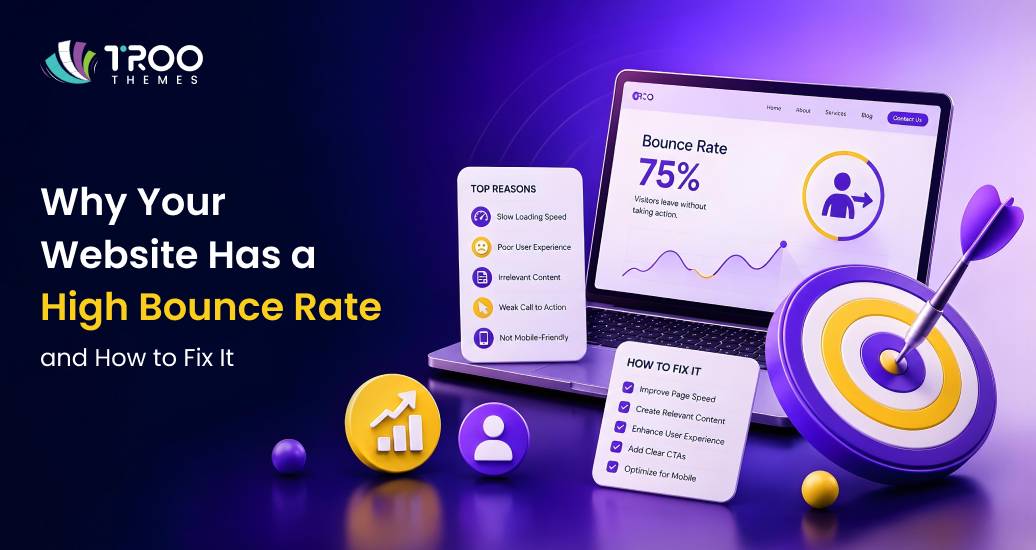
Most web page owners believe that users walk away if the website design is outdated. In truth, many users abandon your site in seconds – due to a slow, confusing, or cluttered experience. Having a good-looking website will not compensate for a high “website bounce rate” if the content, performance, and/or usability of the site fall short of the expectations of the people who visit it.
Visitors today have a lot of expectations about the sites they visit: that they will be fast loading, smooth and responsive on mobile devices, and provide them with useful information without any hindrances. Everyone involved in a business, agency, developer, theme sales or others – optimizing your website’s user experience has become a must to keep your users on your site.
If your bounce rate is high, you can rest assured that your visitors aren’t getting what they are looking for. This can result in lost conversions, bad search engine optimization, and diminished trust in your brand. Fortunately, however, it is not a thing that needs to be totally redesigned.
However, in many instances, the fine adjustments that can be made at appropriate times can be effective in lowering the bounce rate while not necessarily boosting the general amount of engagement.
Improve User Experience
Better performance and usage can also help to retain users on the website.
The Real Meaning of a High Bounce Rate
Website bounce rate is the ratio of visitors who visit a website and only view one page before departing. High numbers of exits are not necessarily bad, but when there are many, there may be content relevance, speed, navigation, or usability problems.
Website exit rate is slightly different. It is the percentage of people who do not complete the page, even if they did click on a few other pages before bouncing. After knowing both of these metrics, one can see the reasons behind the drop-off or frustration of visitors.
If they are bouncing from the product pages, service pages, or landing pages shortly after, however, it may be a pointer to more essential problems of the site’s user experience.
Businesses and theme sellers must understand the importance of optimizing the bounce rate, as it can impact their conversions, search engine rankings, and customer trust.
The Real Reasons Visitors Leave Websites Quickly
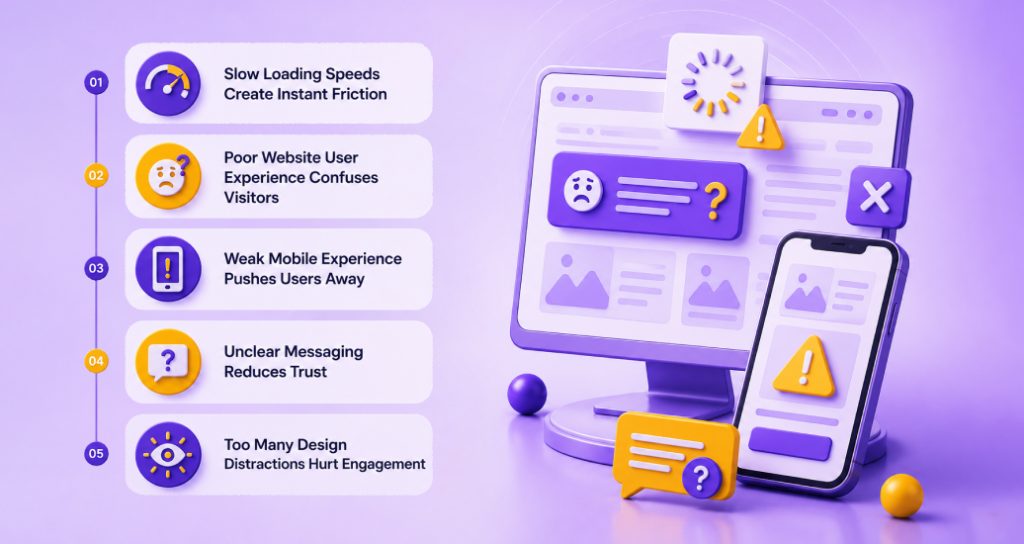
Slow Loading Speeds Create Instant Friction
Website speed is among the most significant reasons why visitors tend to bounce swiftly. Users anticipate pages to load almost immediately. Just a few minutes of delay can make a big difference in the number of site abandonments.
There are many reasons why websites can be slow, such as large images, an excessive number of plugins, low-quality web hosting, and scripts that are not optimized. People don’t like to wait for a slow website to load, particularly on mobile devices.
This is especially true for theme and template sellers. Today’s buyers are looking for templates that are lightweight, highly functional, and designed to be fast.
Poor Website User Experience Confuses Visitors
If a website fails to apply good user experience strategies, it confuses visitors to the website.
Visitors must be aware of what the website offers and the next steps. Users pause, even when they get lost or overwhelmed by information, and they even leave the page.
It’s important to have clarity in the website user experience. The message should be easy for the visitor to read, know the important information that is being conveyed, and act upon it without confusion.
When users feel overwhelmed or lost, engagement decreases very rapidly.
Weak Mobile Experience Pushes Users Away
Mobile traffic continues to dominate across industries. If a website does not work properly on smaller screens, visitors often leave immediately.
Common mobile issues include:
- Text that is difficult to read
- Buttons placed too close together
- Slow-loading mobile pages
- Broken layouts and spacing problems
- Difficult navigation menus
Responsive design is a must now. You’ll find that you start to lose visitors and conversions if you don’t optimise your site for mobile.
Unclear Messaging Reduces Trust
The visitor’s first impression of a website is made within a few seconds of his or her arrival. Some uncertainty on the value proposition, messaging, or a good headline can lead to hesitation.
Users should quickly understand:
- What the business offers
- Who the service or product is for
- What action should they take next
Clear communication helps improve website engagement because users feel more confident staying on the site.
Too Many Design Distractions Hurt Engagement
Too many visual effects, autoplay videos, popups, and animations can overwhelm users and cause them to miss out on key content. Use of contemporary components may be useful to websites, but using them too much can create friction.
A simple and focused design is best, as it guides the user naturally through the experience.
Why Redesigning the Entire Website Is Not Always Necessary
There are many website owners who believe the only solution is to redesign their websites. When the problems are usability or performance related, redesigns can be costly, time-consuming, and unnecessary.
Little changes can make a big difference. You may be able to cut back on bounce rates without having to start from scratch. You can make a few changes in the structure of your content, site speed, navigation, etc., and cut back on bounce rate without starting anew.
If your agency or marketplace offers several sites or templates, this is a great help. With incremental improvements, teams will improve performance while keeping the same branding and structure.
Instead, a savvy idea is to repair the friction points and not to replace everything.
Keep Visitors Engaged
Optimize for quicker, user-centric templates, favoring contemporary usage patterns.
Simple Ways to Reduce Bounce Rate Without a Full Redesign
Improve Website Speed and Performance
One of the quickest ways to lower the bounce rate is to make improvements. Faster websites will provide smoother experiences and get more people to visit other pages.
Optimize images for smaller file sizes without compromising quality.
Also, fewer scripts and plugins will make the site load faster. Too many external tools are used on many websites, that add weight and slows down the rendering of the pages.
Stability and performance are further enhanced by reliable hosting and caching systems. Websites that have a solid technical base can continue to function during traffic surges.
Any improvement in the speed of your website will make a difference in your bounce rate optimization efforts.
Improve Content Structure and Readability
People don’t read all the words on a page. Most audiences scan the material and will go on to the next article if it is not of interest.
Making texts readable helps visitors stay engaged longer. This includes:
- Clear headings and subheadings
- Shorter paragraphs
- Better spacing between sections
- Easier-to-scan content layouts
- Strong calls-to-action
Good content structure makes users’ experience with websites better as they can find information faster.
Optimize for Mobile Users
Mobile optimization plays a major role in bounce rate optimization. Websites can be aesthetically pleasing on desktop computers, but they can be less than desirable on a mobile device.
Responsive designs should adapt to screen sizes in a seamless manner. Navigation should be easy and touch-friendly.
Mobile speed also matters significantly. Faster mobile experiences are achieved through compression, minimisation of scripts, and faster server response times.
The companies, developers, and theme makers that are mobile-friendly tend to drive improved engagement and retention.
Improve Visual Hierarchy Without Changing the Entire Design
Visual hierarchy leads the visitors to important actions and information. A few tweaks can make things more user-friendly without the need for a complete redesign.
Making websites easier to navigate by improving typography, spacing, contrast, and placement of content.
Visitors should immediately notice:
- Key headlines
- Important buttons
- Main services or products
- Primary navigation elements
When visual structure supports user behavior, websites become easier to use and more effective at improving engagement.
Bounce Rate Optimization Tips for Theme and Template Sellers
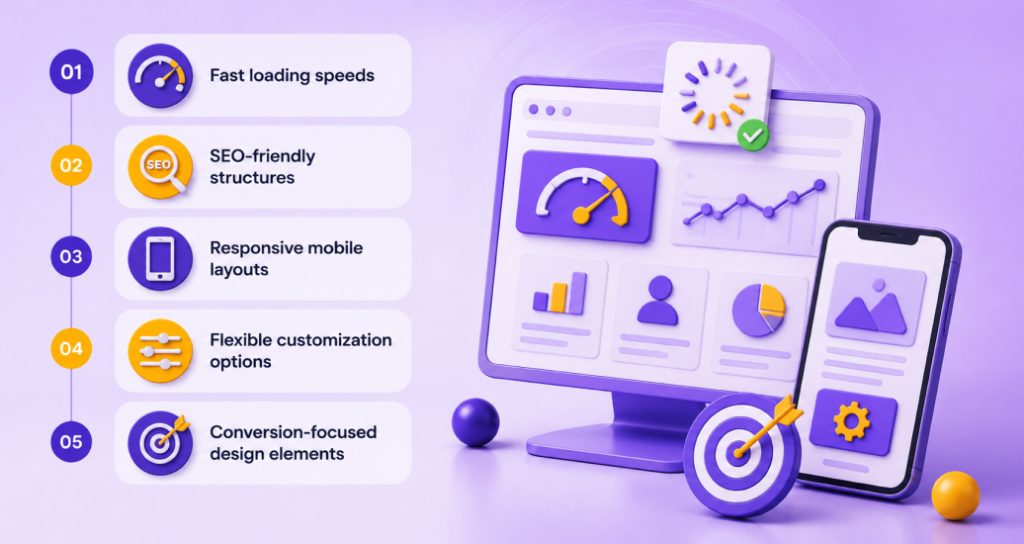
Theme and template buyers now expect more than attractive designs. Performance and usability have become major purchasing factors.
Modern buyers often look for templates that provide:
- Fast loading speeds
- SEO-friendly structures
- Responsive mobile layouts
- Flexible customization options
- Conversion-focused design elements
For marketplace vendors and WordPress professionals, focusing on usability can improve product value significantly.
Themes designed around website user experience tend to perform better because they help businesses retain visitors and improve engagement naturally.
Performance optimization is now a competitive advantage within the themes and templates market.
How to Measure Website Engagement Improvements
Bounce rate alone does not provide the full picture. To understand whether optimization efforts are working, websites should also monitor additional engagement metrics.
Important indicators include:
- Average session duration
- Pages per session
- Scroll depth
- Click-through rates
- Conversion rates
- Returning visitor percentage
Using analytics, you can determine which pages are losing visitors and which improvements are necessary.
With consistent monitoring, companies or developers can improve the user experience of a website over time without having to make assumptions.
Conclusion
Individuals don’t tend to quit websites in one way. Typically, a low performance, confusing layout, low user-friendliness, and obscure messaging are all responsible for a high bounce rate the majority of the time.
There are solutions to these problems which do not require a complete redesign. A few tweaks to the website can increase engagement and decrease bounce rates. Increasing website speed, navigation, clarity and usability can have a significant impact on strengthening engagement and helping to reduce bounce rates.
The user experience is gaining more importance to businesses, developers, and marketplace sellers. The fast, easy, and hassle-free navigation of the browse experience is what modern users want.
TRooThemes centers on user-friendly, responsive and performance focused themes and templates. Companies will benefit from picking out the right templates to get visitors to their websites and keep them there.