


 Seller Dashboard
 Logout

There are a lot of firms who have lots of money to spend promoting themselves but can’t obtain steady leads. While paid campaigns can generate some traffic to your site in the short term, it may be challenging to sustain the momentum after you’re done with the initial expenditure. Therefore, it is crucial to have a solid strategy for website marketing, at a time more crucial than ever.
This can be done day and night, 365 days a year, on a well-organized site that has an audience, answers their questions, establishes trust, and gets them to convert at any hour in the day. Relying solely on ads, businesses can establish systems that work well for organic lead generation via search visibility, user experience, and content.
The aim of business owners, agencies, developers, and theme sellers is no longer to create pretty websites. There’s a focus now on developing websites that encourage users to take an action. On every page, whether they are booking a service, requesting a quote, signing up for a newsletter, or even making a purchase, each page should add to the website sales funnel.
If properly executed, a website extends beyond being a brochure. It becomes an active sales and lead generation platform.
Build Smarter Websites
Create websites designed for better visibility and conversions.
Why Most Websites Fail to Generate Consistent Leads
Many sites fail due to their lack of functionality and emphasis on looks and style. The beauty of a design can catch somebody’s eye, but it doesn’t equate to greater website sales. Before taking action, the visitor should have clarity (or understanding), direction, and confidence.
Weak messaging is a common problem. People are typically coming to a homepage and are not really sure what the company is about or why it’s relevant. If no sense of the value prop is established, users leave fast.
Another issue is poor navigation as well. The more complex the menu is, the more confusing the page layout is, and the less consistent the page structure is, the more friction it will generate. The visitors should be able to flow through the site without confusion.
The performance of the website is also a significant factor in website lead generation. Slow Website Pages = Low Engagement & Poor Search Rankings. It is also important to be mobile responsive, as the vast majority of web users are now accessing the internet from their mobile devices.
Traffic is not the key to success. In many cases, businesses take pride in the number of visitors and forget to see if they are converting visitors. Many times, businesses are proud of the number of visitors and don’t get into checking if they are converting or not. The actual goal is to turn visitors of your website into leads or customers by designing the pages and presenting the content to the user.
Build a Website That Guides Visitors Toward Action
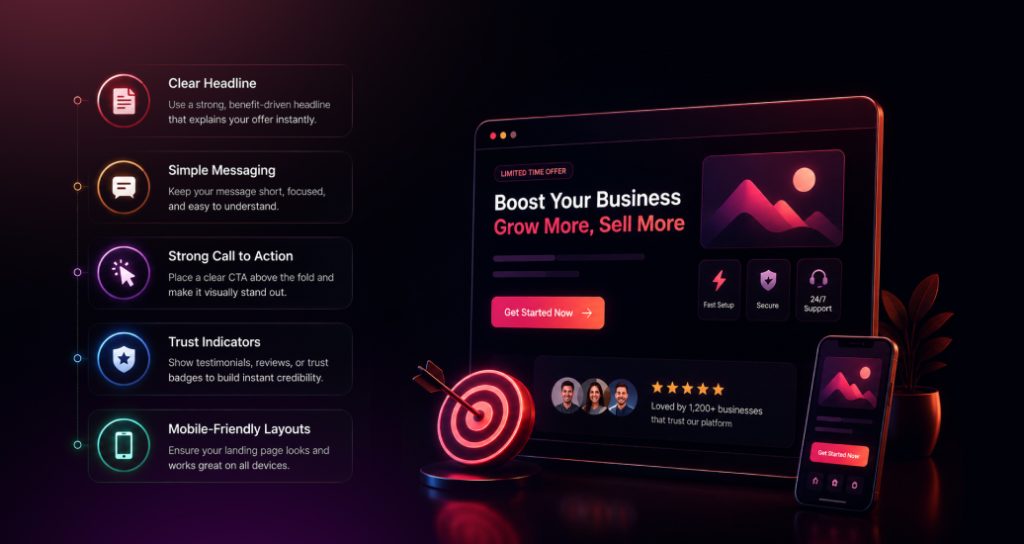
A successful website sales funnel assists visitors in making their way from “curious” to “decision making” in a logical and smooth manner. Each page must have a particular reason that fits into that journey.
Landing pages, in particular, are essential as they are typically the first point of contact that a business has with a potential customer. Clear, structured, and trust-building are essential in supporting landing page conversions.
Effective landing pages usually include:
- A clear headline explaining the offer
- Simple and focused messaging
- Strong website call to action placement
- Testimonials or trust indicators
- Mobile-friendly layouts
Navigation should also support conversion goals. Websites should not present users with a dizzying array of options. Smoothing out user journeys can lead to improved engagement and higher conversion rates for businesses.
Developers and theme makers will be able to create templates that focus on usability, as well as visual appeal. A website should be modern, but also used for lead generation and interaction with the users.
The Role of SEO in Organic Lead Generation
One of the most crucial components of an organic marketing plan is the visibility of a search. A top ranking in search engines helps businesses continue to receive traffic after they publish articles.
The first step in SEO is to know what people are looking for. The keywords should be integrated into the content in a natural way; for example, website marketing strategy, website lead generation, and website conversion tips should be incorporated into the content naturally and not as a filler in every sentence.
The website’s structure also impacts SEO performance. Websites that are easy to navigate, fast when loading up, and mobile-friendly are preferred by search engines. Making a few technical tweaks to your site can sometimes help you to improve your rankings as well as user satisfaction.
Some practical website SEO tips include:
- Optimizing page titles and meta descriptions
- Using clear heading structures
- Improving internal linking
- Compressing large images
- Creating valuable long-form content
The quality of the content is equally important as technical optimization. Search engines are continually more focused on pages that offer useful, relevant, and trustworthy information.
Frequently investing in content often leads businesses to develop greater authority over time. This steady visibility supports organic lead generation without requiring continuous advertising spend.
Improve Website Conversions
Use conversion-focused templates designed for business growth.
Content That Helps Convert Website Visitors
Content is a key factor in driving website traffic to generate leads for businesses. People do not make decisions right away. Before calling a business, the majority of users seek information, comparisons, or reassurance.
Hence, the effectiveness of educational content. Blogs, service pages, guides, and faq answer common questions and help to build credibility.
For instance, a web design agency can write articles on enhancing the conversion of landing pages or website SEO tips. An eCommerce template marketplace could develop material on the advantages of utilizing particular layouts in order to engage customers more. These topics draw in visitors who have a vested interest in resolving problems that are relevant to them.
More than one touchpoint on the buyer’s journey is supported with strong content. Some visitors are looking for information, and others are looking to take action. It is necessary to have content on websites that caters to both groups.
There is also consistency to be considered. By consistently sharing content that resonates with their target audience, businesses can build trust and keep their content visible in search results.
Website Conversion Tips That Increase Sales
Converting visitors into customers often depends on small improvements that collectively create a better user experience. Businesses do not always need complete redesigns to see better results.
One important factor is the website’s call to action placement. CTAs should appear naturally throughout the website without feeling repetitive or aggressive. Users should immediately understand the next step after reading a page.
Trust also plays a major role in conversions. Visitors are more likely to engage when websites include:
- Customer testimonials
- Case studies
- Client logos
- Security badges
- Transparent contact information
Another key aspect is the optimization for mobile. Poor performing websites on mobile devices miss out on engagement and sales opportunities. Responsive layouts, readable text and quick page loading enhance accessibility among all devices.
User behavior is directly impacted by page speed too. Slow loading sites lead to frustration and higher bounce rates. Optimizing performance will improve engagement, SEO efforts, and conversions.
Turning Your Website Into a Passive Lead Generation System
Once visitors arrive on your site and traffic is converting without needing to do that much manual work, your website becomes a passive income website. This is not something that can be achieved in one day, but the long-term benefits are great.
Typically, these three components are integrated:
- SEO for ongoing visibility
- Valuable content for engagement
- Conversion-focused design for lead generation
These all combine to form an organic, sustainable marketing effort.
A blog post that is search engine optimized, for instance, could continue to bring site visitors for a number of months or years. Those who find the content can click on service pages, entering their details to join newsletters, or request consultations.
It’s a steady stream of traffic and conversions that will bring lasting value. Companies build up their digital assets while at the same time decreasing their need for paid advertising.
Agencies and developers can help their clients by designing websites that are not just aesthetically pleasing for the moment but are also scalable and high-performing for the long term.
What Theme and Template Sellers Should Focus On
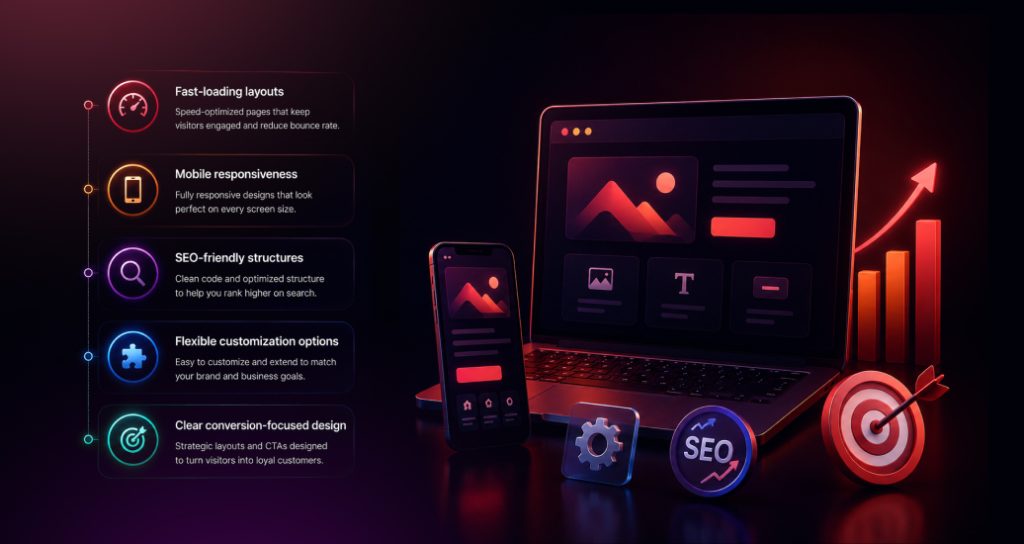
The expectations for themes and templates have changed significantly. Buyers no longer want designs that only look attractive. They want templates that support performance, usability, and conversions.
Modern website buyers often look for:
- Fast-loading layouts
- Mobile responsiveness
- SEO-friendly structures
- Flexible customization options
- Clear conversion-focused design
Marketplace vendors and WordPress professionals should consider how templates contribute to website lead generation and user engagement.
Business owners increasingly understand the value of conversion-focused design. As a result, themes that support landing page conversion and strong user experience often stand out in competitive marketplaces.
Developers can also provide added value through documentation, optimization guidance, and ongoing support. These factors help buyers achieve better long-term website performance.
Conclusion
There is no more successful website marketing strategy that focuses on just traffic. The true objective is to build a website that is always evolving and working for your business with regard to lead generation, customer engagement, and sales.
Organic growth is more likely to yield long-term success for businesses that prioritize user experience, SEO, content quality, and conversion strategy over paid advertising. Over time, making small improvements to website structure, messaging, and performance can make a huge difference in terms of website sales.
The change opens new possibilities for agencies, developers, and marketplace vendors to create websites that bring clear business benefits. Templates and SEO-friendly designs are no longer luxury features but a mandatory requirement for conversion.
Platforms such as TRooThemes allow businesses and professionals to use modern themes and templates that are developed with usability, responsiveness, and performance as their main focus. The right foundation could make it easier to convert web visitors, help generate organic web leads, and create a website which will be working long after it has gone live.