


 Seller Dashboard
 Logout
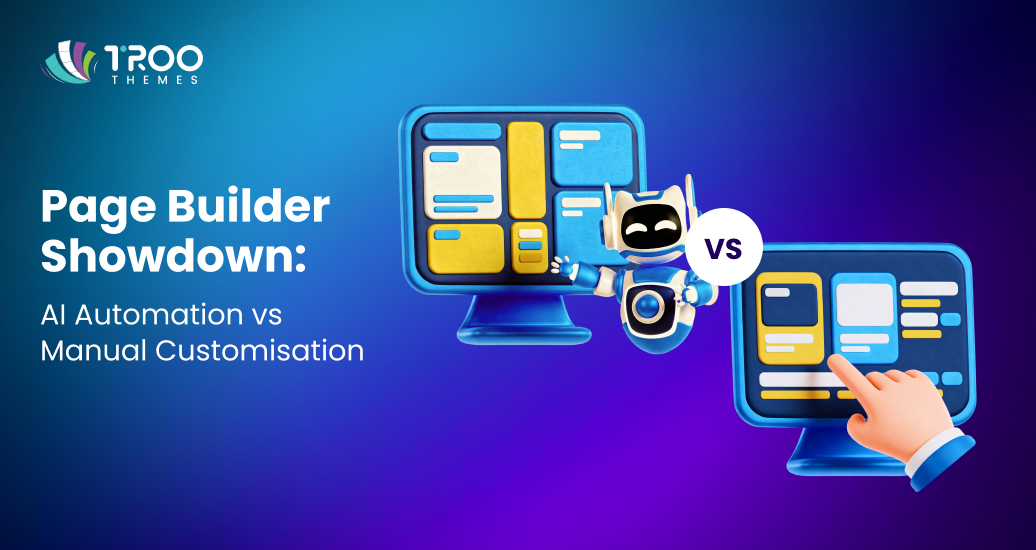
Choosing how you build your website is one of the most important decisions you make when defining your digital presence. With user expectations constantly rising and competition increasing across every industry, brands need websites that are visually compelling, fast, intuitive, and strategically structured. Today, the biggest debate centers around AI-powered page builders versus traditional manual customization. Each approach offers a distinct way of building and managing websites, and both have grown in popularity for very different reasons.
On one side, AI automation promises remarkable speed, reduced effort, and simplified workflows for anyone who wants to build a website without touching code. On the other side, manual customization continues to dominate when businesses require full control, advanced design precision, scalability, and unique brand identity. This article examines both methods in depth, exploring their strengths, limitations, and ideal use cases to help you determine which approach best aligns with your website goals.
Understanding AI Website Builder
An AI website builder refers to a tool that uses artificial intelligence to automate significant parts of website creation. These “AI website builders” (or “AI website generators” or “AI landing page builders”) allow users, often without coding or design experience, to generate website layouts, design elements, and sometimes even content through simple input or prompts. Many provide drag-and-drop interfaces combined with AI-suggested design choices, and some even generate initial copy, images, or UX suggestions automatically.
At its core, such builders may offer a mix of template-based design, AI-driven UI/UX generation, responsive design handling, and sometimes built-in hosting, CMS, or content-generation features. The goal is to let users launch a functioning website quickly with minimal technical overhead.
Understanding Manual Website Customization
Manual customization or traditional page building refers to building websites using classic website frameworks, page-builder tools (with manual configuration), or even custom coding. In this approach, a developer or designer selects or builds themes, manually adjusts layouts, configures plugins (if using a CMS), writes or imports content, ensures custom styling, and sets up functionality, sometimes customizing HTML, CSS, JS, or backend logic as needed.
This method gives full control over design, UX, performance, and functionality. It is especially useful for complex websites, unique branding needs, scalability, advanced integrations, or performance optimizations that go beyond what template-based or AI-based builders typically allow.
Key Benefits of AI-Powered Page Builders
Speed and fast time-to-launch. AI website builders can generate a basic website in minutes or hours, much faster than the traditional weeks-long process.
Ease of use for non-technical users. You do not need to know coding or deep design; AI automates design decisions, layout, and often content creation, making it accessible to small business owners, freelancers, or startups without technical resources.
Cost-effectiveness and resource efficiency. For many small sites or simple projects, employing an AI builder is cheaper than hiring a developer or team or investing many hours into manual building.
All-in-one convenience. Many AI website builders bundle hosting, maintenance, and built-in features (like responsive design, basic SEO optimization, content generation, and drag-and-drop editing), reducing the need to manage multiple tools or services separately.
Good for small sites, landing pages, MVPs, or quick prototypes. For minimal viable websites such as portfolios, landing pages, or early-stage business sites, AI builders are often more than enough to meet needs while saving time.
Limitations of AI-Powered Page Builders
- Limited design flexibility and customization control. Because AI builders rely on templates, algorithmic layouts, and predefined components, they often restrict how much you can tweak design, layout details, or bespoke UX elements.
- Risk of generic or “template-looking” websites. Using preset templates and AI-driven suggestions can result in websites that look similar to many others, making it harder for a brand to stand out or maintain a unique identity.
- Constraints for complex websites or custom features. For advanced functionality, like complex integrations, unique workflows, custom plugins/modules, e-commerce customization, or large-scale sites, AI builders may struggle or become overly limiting.
- Potential long-term tradeoffs in performance, scalability, data control, and SEO optimization. AI or template-based code may be less optimized, harder to adapt, or harder to scale compared to manually-coded and optimized sites, especially when custom logic or integrations are needed.
- Platform dependency or “lock-in”. Many AI builders are tied to their own ecosystems (hosting, CMS, proprietary tools), which may make it difficult to migrate away or export clean code for future changes.
Build High-Performance Websites with Troothemes
Modern, fast-loading website themes crafted for speed, flexibility, and long-term scalability perfect for businesses, creators, and growing brands.
Benefits of Manual Customization / Traditional Page Building
- Full control over design, functionality, and user experience. Manual building allows for precise customization: layout, interactive features, advanced UX flows, custom modules, clean code, and tailored user journeys.
- Scalability and flexibility for complex or large-scale sites. Projects that need custom integrations, complex backends, e-commerce, user management, performance optimization, and manual building give you the flexibility to design architecture and code to suit those needs.
- Better long-term maintainability and control. Because you own the structure, code, and configuration, you are not locked into a proprietary platform. You can optimize performance, SEO, security, and scalability as the site grows.
- Unique branding and tailored design. With manual customization, you can craft a site that truly reflects your brand identity, design aesthetics, and specific business requirements rather than relying on generic templates.
Choosing Between AI Automation and Manual Customisation: A Decision Framework
When deciding which approach is right for your website, consider the following factors:
- Project size and complexity: If you need a simple site, a portfolio, a landing page, an MVP, or a brochure site, AI builders are often sufficient. For complex projects, dynamic content, custom functionality, or large-scale platforms, manual customization offers the flexibility you need.
- Timeline and speed to launch: If you require a website quickly, for a product launch, campaign site, or MVP, AI automation can deliver fast. If you have more time and want precision, manual building pays off.
- Budget and resources: AI builders generally require lower upfront costs and minimal technical resources; manual building often requires investment in development, design, and maintenance.
- Technical or design expertise: If your team lacks coding or design skills, AI builders lower the barrier to entry. If you have experienced developers/designers, the manual gives creative freedom and quality control.
- Branding and scalability needs: For strong branding, unique layouts and long-term growth, manual customization offers more room to grow compared to template-based AI builds.
The Hybrid Approach: AI + Manual Customisation
For many businesses, a hybrid approach, using an AI builder for initial setup and then manually customizing and refining, offers a balanced path. You get the speed and convenience of AI for launch, combined with the flexibility and control of manual work to fine-tune design, functionality, SEO, and scalability.
This strategy works well when you want to validate ideas quickly (with a landing page or MVP), but anticipate growth, custom needs, or brand differentiation later. It can save time and cost initially while still allowing long-term customization and optimization.
Conclusion
Both AI-powered page builders and manual customization have distinct advantages and drawbacks. AI automation shines when you need speed, ease, low cost, and a quick website launch without technical skills. Manual customization remains the gold standard when you want maximum control, scalability, unique branding, advanced functionality, and long-term flexibility.
If you are building a small business site, a simple portfolio, a landing page, or want to test quickly, AI-powered website builders or no-code AI page builders are a practical choice. On the other hand, if your project requires custom integrations, scalability, tailored UX/UI, performance optimization, or a unique brand identity, manual customization is likely worth the effort. For many projects, the hybrid approach delivers the best of both worlds.
For those who want a fully customized, scalable, and high-performance website, working with a professional design and development team ensures long-term value. At TRooThemes, we specialize in delivering such tailored solutions; combining design expertise, scalable architecture, clean code, and custom features, helping businesses move beyond templates and build websites that truly reflect their brand and growth vision.